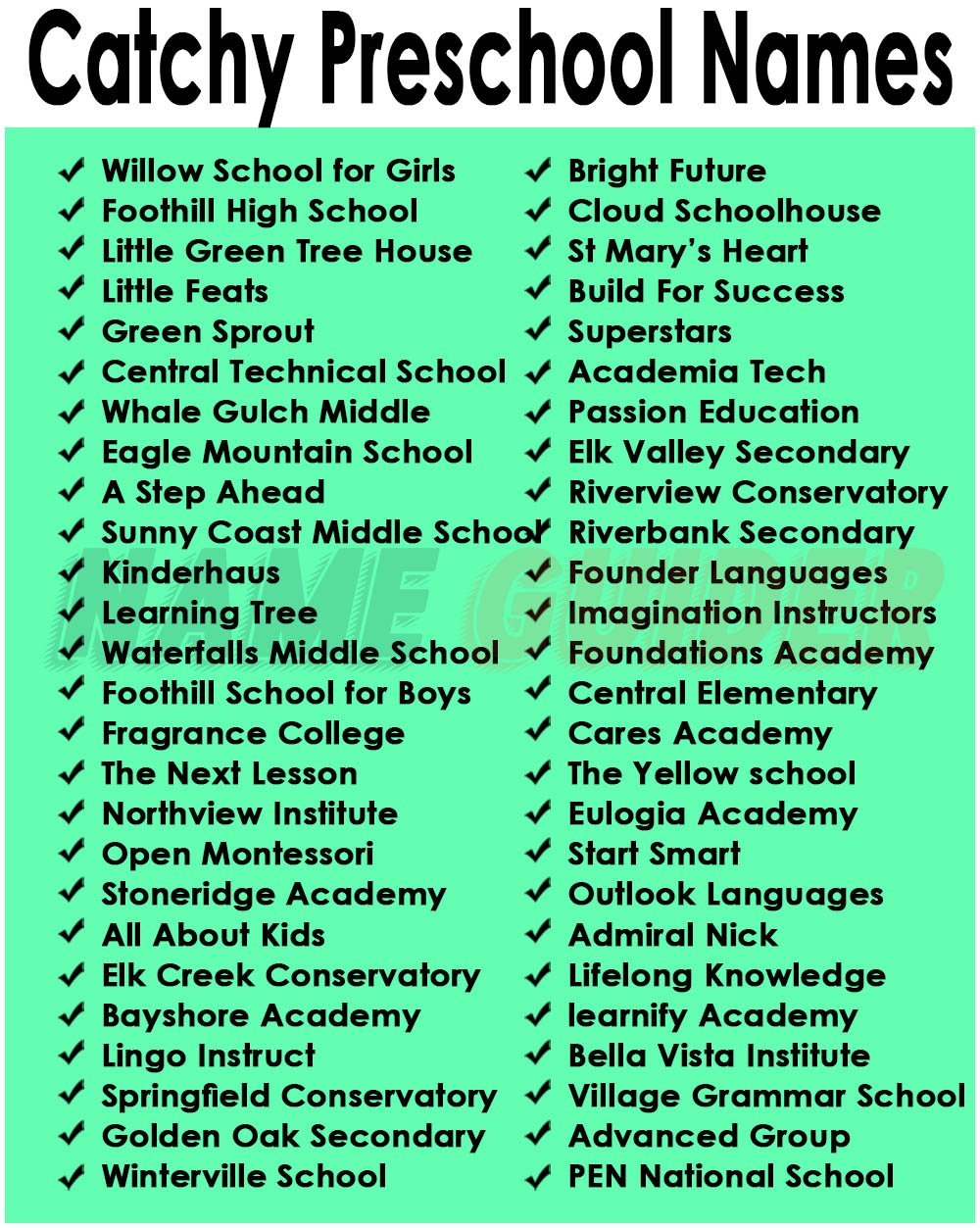
Choosing a name for a school isn't just about picking something catchy; it's about crafting an identity, setting a legacy, and communicating your institution's very soul. The elements and components of school names are far more than mere words; they are strategic decisions that shape perceptions, attract students, and resonate with a community. A well-chosen name becomes a powerful branding tool, the first impression of an educational journey, and a touchstone for values and aspirations.
Think of it as the foundational DNA of your school – a name that will appear on diplomas, uniforms, and digital banners for generations. It carries the weight of your mission, the promise of your pedagogy, and the spirit of your campus. Get it right, and it becomes a source of pride and recognition. Get it wrong, and it can create confusion, miss opportunities, or even misrepresent your core purpose.
At a Glance: Crafting the Perfect School Name
- Identity First: Your name must mirror your school's core values, mission, and educational philosophy.
- Keep it Simple: Memorable, easy-to-pronounce names have the best recall and shareability.
- Rooted in Place: Local history, landmarks, or cultural elements can add profound meaning.
- Timeless Appeal: Avoid fleeting trends; opt for professionalism and longevity.
- Seek Feedback: Test potential names with your target audience (parents, students, educators).
- Check Uniqueness: Ensure the name is distinct locally and its digital presence is available.
- Visual Test: Imagine the name on signage, uniforms, and documents for aesthetic appeal.
- Future-Proof: Choose a name that remains relevant as your school grows and evolves.
The Enduring Power of a Name: More Than Just a Label
A school's name is its initial handshake with the world. It’s the headline that precedes the story, the cover of the book, and often, the primary filter through which prospective families and faculty evaluate an institution. This isn't just about sounding "good"; it's about strategic communication. A name that clearly articulates an academic focus, a philosophical leaning, or a unique community spirit performs a vital marketing function, distinguishing your school in a crowded educational landscape.
Consider the journey of a name: from a fledgling idea to a revered institution. It becomes shorthand for excellence, innovation, tradition, or community. It influences everything from school mottos and mascots to alumni associations and fundraising efforts. The resonance of a name can attract a specific demographic, fostering a like-minded community even before the first brick is laid. This initial branding is critical, setting the tone for the entire educational environment and building a respected identity from day one.
Deconstructing the DNA of a School Name: Core Elements
Every effective school name, regardless of its category, is built from fundamental linguistic and conceptual components. Understanding these building blocks allows for more intentional and impactful naming decisions.
1. The Noun: The Heart of the Identity
At the core of almost every school name is a substantive noun that grounds its identity. This can be:
- A Proper Noun (Personal or Geographic): Often chosen to honor founders, philanthropists, historical figures, or significant local landmarks.
- Examples: "Lincoln High School," "Marymount Academy," "Riverbend Preparatory."
- Impact: Evokes tradition, respect, local pride, or a connection to a specific legacy.
- A Common Noun (Abstract or Concrete): Reflects values, aspirations, or characteristics.
- Examples: "Summit Academy" (achievement), "Evergreen School" (growth, nature), "Renaissance Institute" (creativity, rebirth).
- Impact: Directly communicates mission, values, or academic focus.
2. The Adjective: Adding Nuance and Depth
Adjectives add color, specificity, and a layer of meaning to the core noun. They can define the school's approach, size, or unique attributes.
- Examples: "Progressive," "International," "Global," "Creative," "Bright," "New."
- Impact: "International Academy" immediately conveys a global outlook. "Creative Arts School" highlights a specific focus. These modifiers help differentiate and specify.
3. The Suffix (or Qualifier): Defining the Institutional Type
The ending of a school name often clarifies its educational level, scope, or type. This is a crucial element for setting expectations.
- School: The most general and universally understood term.
- Examples: "Maple Street School," "Green Valley School."
- Impact: Broad, inclusive, and versatile for all levels.
- Academy: Often suggests a focus on excellence, specific disciplines, or a more rigorous, specialized education.
- Examples: "Quantum Academy," "Summit Academy," "Culinary Arts Academy."
- Impact: Conveys prestige, specialization, and high standards.
- Institute: Implies advanced study, research, or a highly specialized vocational or professional focus.
- Examples: "Renaissance Institute," "Technology Institute."
- Impact: Suggests a deeper, perhaps post-secondary or highly focused, learning environment.
- Preparatory (or "Prep"): Clearly signals a curriculum designed to ready students for higher education.
- Examples: "Canterbury Preparatory," "Oakwood Prep."
- Impact: Emphasizes rigorous academics and college readiness.
- House/Hall: Often used in older, more traditional boarding schools or within a house system, evoking a sense of community and heritage.
- Examples: "Canterbury House," "Pembroke Hall."
- Impact: Conveys tradition, community, and a homelike or collegiate atmosphere.
- College: Typically refers to a post-secondary institution, though some secondary schools use it for historical reasons.
- Examples: "Boston College High School."
- Impact: Varies; can imply higher education or simply a historical naming convention for a secondary school.
4. Evocative Imagery and Metaphor: Storytelling in a Name
Beyond literal definitions, some names use imagery or metaphors to convey a deeper meaning without explicitly stating it.
- Examples: "Phoenix School" (rebirth, resilience), "Harbor School" (safety, growth), "Nexus Academy" (connection, future).
- Impact: Creates a richer, more memorable narrative and emotional connection.
By combining these elements thoughtfully, a school can construct a name that is not only functional but deeply resonant with its intended purpose and audience.
Categories That Speak Volumes: Common Archetypes for School Names
School names often fall into distinct categories, each designed to convey a specific message, appeal to certain values, or highlight a particular academic focus. Understanding these archetypes can help in aligning a name with the school's strategic vision.
Classical & Traditional Options: Echoes of Heritage
Names like “Canterbury House” or those referencing historical figures and established institutions aim to evoke a sense of permanence, heritage, and time-honored educational approaches. These names often use classic geographical references, established surnames, or terms that suggest gravitas and academic rigor.
- Message Conveyed: Tradition, stability, academic excellence, a legacy of learning, timeless values.
- Ideal for: Institutions emphasizing a long history, classical curriculum, or a strong foundation in established educational practices.
- Examples: St. Andrew's School, Westminster Academy, Thacher School.
Modern & Innovative Choices: Forward-Thinking Futures
Names such as “Quantum Academy” or those incorporating terms like "Catalyst," "Nexus," or "Innovate" suggest a forward-thinking ethos, a commitment to cutting-edge education, and a focus on preparing students for the future. They often lean into contemporary language and themes of progress.
- Message Conveyed: Innovation, progress, future-readiness, adaptability, modern pedagogy, dynamic learning.
- Ideal for: Schools focused on technology integration, interdisciplinary studies, project-based learning, or a break from traditional models.
- Examples: Fusion Academy, Synergia Institute, Apex Learning Center.
Nature-Inspired Names: Growth, Discovery, and Harmony
Drawing from the natural world, names like “Evergreen Academy,” "Willow Creek School," or "Cedarwood Prep" connect with environmental values and evoke concepts of organic growth, resilience, and discovery. They often imply a holistic education or a strong appreciation for natural sciences.
- Message Conveyed: Growth, sustainability, discovery, environmental consciousness, tranquility, holistic development.
- Ideal for: Schools with outdoor education programs, a focus on ecological literacy, or those located in natural settings.
- Examples: Redwood School, Summit Springs Academy, Ocean Shore Institute.
Achievement-Focused Names: Emphasizing Excellence
Names such as “Summit Academy,” "Pinnacle School," or "Merit Prep" are designed to emphasize high standards, academic excellence, and a commitment to helping students reach their full potential. They often use metaphors of height, apex, or success.
- Message Conveyed: Excellence, high achievement, aspirational goals, rigorous academics, personal best.
- Ideal for: Schools dedicated to competitive academics, gifted programs, or a strong track record of student success.
- Examples: Sterling Academy, Apex Collegiate, Victory Prep.
Cultural & Arts-Based Names: Fostering Creativity and Expression
For institutions dedicated to creative development, innovation, imagination, and artistic excellence, names like “Renaissance Institute,” "Palette School," or "Harmony Conservatory" are fitting. They immediately signal a focus on the humanities, visual arts, performing arts, or cultural studies.
- Message Conveyed: Creativity, imagination, artistic expression, cultural understanding, innovation, humanistic values.
- Ideal for: Arts schools, conservatories, humanities-focused academies, or schools with robust cultural programs.
- Examples: Crescendo Academy, Muse School of Arts, Lumina Creative Institute.
Leadership Academy Names: Inspiring Future Leaders
Names that convey values of excellence, innovation, transformative education, prestige, and achievement, often including "Leadership," "Vanguard," or "Torch," clearly position the institution as a developer of future leaders.
- Message Conveyed: Leadership development, innovation, impactful education, prestige, character building.
- Ideal for: Schools with a specific curriculum focused on leadership skills, civic engagement, or entrepreneurial spirit.
- Examples: Vanguard Leadership Academy, The Citadel School, Ascend Leadership Institute.
International and Globally-Focused Names: A Worldview Approach
Incorporating terms like "International," "Global," "Worldwide," or "Cosmopolitan" immediately impacts global recognition and appeals to diverse student populations. These names convey values of diversity, world citizenship, and academic excellence within a global context.
- Message Conveyed: Diversity, global citizenship, cross-cultural understanding, academic excellence on an international scale.
- Ideal for: Schools with diverse student bodies, international baccalaureate programs, or those preparing students for global careers.
- Examples: Global Scholars Academy, WorldBridge School, Meridian International Prep.
STEM or Technology-Focused Names: Innovation at the Core
For schools committed to science, technology, engineering, and mathematics, names that reflect innovation, academic excellence, and a cutting-edge approach are crucial. Think "STEM," "Tech," "Innovate," "Applied," or even specific scientific terms.
- Message Conveyed: Innovation, scientific inquiry, technological advancement, problem-solving, analytical thinking.
- Ideal for: Schools specializing in STEM subjects, coding, robotics, or engineering pathways.
- Examples: Nexus STEM Academy, Applied Sciences Institute, Quantum Tech School.
Preparatory and College-Ready Names: Academic Rigor for the Future
Names that include "Preparatory," "College," or "University" often emphasize rigorous academics and college readiness, combining tradition, excellence, and a forward-thinking education designed to transition students successfully to higher education.
- Message Conveyed: College readiness, rigorous academics, intellectual development, future orientation.
- Ideal for: Schools whose primary mission is to prepare students for top universities and colleges.
- Examples: University Prep High School, Collegiate Academy, Keystone Prep.
Creative & Niche Focus: Beyond the Standard
Sometimes, a school name needs to be particularly catchy, cool, or even whimsical to suit a very specific niche. This could include names for specialized high schools, alternative learning environments, or even fictional contexts for stories or games like Animal Crossing. These names prioritize distinctiveness and memorability, often bending conventional rules.
For those looking to explore a wide range of options, sometimes a brainstorming tool can kickstart the creative process and help you generate random school names that might fit these more unique categories.
- Message Conveyed: Uniqueness, fun, specific niche, unconventional approach, strong identity.
- Ideal for: Schools targeting niche interests, fictional settings, or those aiming for a very distinct, non-traditional brand.
- Examples: The Discovery Guild, Dream Weavers School, Pixel Valley High.
Crafting Your School's Identity: A Step-by-Step Guide to Naming
The process of naming a school is both an art and a science. It requires introspection, creativity, and strategic foresight. Here’s how to navigate the journey to an effective name.
Step 1: Define Your Core Identity – What Are You Truly About?
Before you even think of words, you must deeply understand your school's DNA. What are your non-negotiable values? What is your mission statement, and what does it really mean? What educational philosophy drives your curriculum?
- Action: Convene stakeholders (founders, educators, community leaders) for a brainstorming session. List keywords associated with your vision: innovation, tradition, community, excellence, global, nature, arts, leadership, technology, holistic, discovery.
- Why it Matters: The name must be an authentic reflection of who you are. A "Quantum Academy" focused on traditional rote learning would create brand dissonance.
Step 2: Prioritize Simplicity and Memorability – Easy to Say, Easy to Remember
A complicated or overly long name is a barrier to recall and sharing. Aim for something that rolls off the tongue and is easy to spell and pronounce.
- Action: Test potential names aloud. Can a child easily say it? Can an adult easily remember it after hearing it once? Avoid acronyms if the full name is obscure.
- Why it Matters: A simple, memorable name becomes a conversation starter, not a tongue-twister. It aids in word-of-mouth marketing and brand recognition.
Step 3: Tap into Local Lore and Heritage – Meaningful Connections
Connecting your school to its geographical or historical roots can imbue the name with deep significance and local pride.
- Action: Research local history, prominent figures, unique landmarks, indigenous names (with respect and permission), or local flora/fauna. Is there a "Millstone Hill" or "Willow Creek" nearby? Was there a notable local educator?
- Why it Matters: A location-relevant name fosters a sense of belonging and community ownership, making the school feel intrinsically linked to its surroundings.
Step 4: Future-Proof Your Choice – Avoid Trends, Embrace Timelessness
Fads come and go, but your school name should ideally last for centuries. Avoid overly trendy terms that might sound dated in a decade.
- Action: Ask yourself: Will this name still feel relevant and professional in 20, 50, or 100 years? Steer clear of pop culture references or highly specific technological terms that might evolve rapidly. Focus on enduring concepts like "discovery," "knowledge," "growth," "community."
- Why it Matters: A timeless name ensures longevity and avoids the need for costly rebranding later. It projects stability and foresight.
Step 5: Test the Waters: Gather Feedback – The Audience's Perspective
What you love, your target audience might misunderstand. Gauging reactions from your prospective community is invaluable.
- Action: Present your top 3-5 name candidates to focus groups including prospective parents, local educators, community leaders, and even potential students. Ask open-ended questions: "What does this name make you feel?" "What kind of school do you imagine this is?" "Is anything confusing?"
- Why it Matters: This feedback can uncover unintended associations, pronunciation difficulties, or clarify which name resonates most strongly with your target demographic.
Step 6: Secure Your Brand: Uniqueness and Digital Presence – Practical Checks
A great name is only great if you can actually use it and own it. This step is non-negotiable for practical implementation.
- Action:
- Local Uniqueness: Conduct thorough searches with your local department of education, business registries, and even local search engines to ensure your chosen name isn't already in use by another school or a confusingly similar entity.
- Web Address Availability: Check for domain name availability (.com, .org, .edu, etc.). A good name with an unavailable domain can be a significant hurdle.
- Social Media Handles: See if suitable handles are available across key platforms.
- Why it Matters: Avoiding legal conflicts, establishing a strong online presence, and preventing confusion are critical for your school's long-term success and branding.
Step 7: Visualize the Name in Action – From Signage to Stationery
The aesthetics of your name are as important as its sound. How will it look across various mediums?
- Action: Mock up the name on a school uniform, a school bus, the main sign, letterhead, and a website header. Consider different fonts and logos. Does it look balanced? Is it legible? Does it feel professional and appropriate?
- Why it Matters: Visual appeal reinforces your brand identity. A name that looks awkward or cluttered in print will diminish its impact.
By meticulously following these steps, you move beyond mere brainstorming to a strategic naming process that culminates in a choice that is not only appealing but deeply aligned with your school's vision and poised for lasting success.
Beyond the Obvious: Subtleties and Strategic Considerations
Crafting a school name goes beyond the initial brainstorming; it involves appreciating the subtle ways words can enhance or detract from your brand.
The Power of Suffixes: More Than Just an Ending
As discussed earlier, the suffix of your school name is a powerful indicator of its nature and aspiration. Choosing between "School," "Academy," "Institute," or "Preparatory" is a strategic decision that immediately sets expectations for your audience.
- "School": Inclusive, fundamental, often K-12. Appeals to a broad audience.
- "Academy": Suggests specialized focus, excellence, and a higher standard. Common for private schools or those with specific curricula (e.g., arts, STEM).
- "Institute": Conveys advanced learning, research, or a highly focused professional/vocational path. Often implies post-secondary or specialized training.
- "Preparatory" / "Prep": Clearly signals a college-bound mission with rigorous academics.
- "Center": Can denote a learning hub, a specialized facility, or a more informal learning environment.
Consider the connotations of each suffix carefully. Does "Harmony School" or "Harmony Academy" better reflect your music-focused institution's rigor?
Avoiding Pitfalls: What Not to Do
- Don't Be Generic: Avoid names that could apply to any school in any location. "Community School" or "City High" lack distinctiveness.
- Don't Be Too Niche (Unless Intentional): A name like "The 21st Century iPad Robotics Academy" might feel incredibly current now, but could be limiting or dated in a few years as technology evolves. If your niche is that specific and core, ensure the name has enduring elements.
- Don't Use Jargon or Acronyms Without Context: If your name relies on an obscure academic term or an acronym, it might confuse more than enlighten. Acronyms can work after the full name is established, but not usually as the primary brand.
- Don't Choose Anything Difficult to Spell or Pronounce: This directly impacts memorability and word-of-mouth.
- Don't Pick a Name with Negative Connotations: Research potential double meanings or unfortunate acronyms. What sounds grand in one language might be offensive in another if you're targeting an international audience.
- Don't Overlook Digital Presence: An amazing name is hampered if its website domain or social media handles are unavailable.
Leveraging Synergies: How the Name Connects to Curriculum and Culture
A truly great school name works in harmony with every other aspect of the institution.
- Curriculum Alignment: Does "Innovate Academy" truly deliver innovative project-based learning? Does "Global Scholars" have a strong international baccalaureate program and exchange opportunities? The name builds expectations that the curriculum must fulfill.
- School Culture: If your name evokes community ("Harbor School"), does your culture support a nurturing, inclusive environment? If it suggests excellence ("Summit Prep"), does your culture foster aspiration and support for high achievement?
- Motto and Mascot: A well-chosen name can inspire a compelling school motto and a unique mascot, further solidifying the brand identity. "Evergreen Academy" might have a motto about 'growing knowledge' and a tree-themed mascot.
By considering these deeper layers, you ensure your school name is not just a label, but a living part of its educational ecosystem.
Common Questions & Misconceptions About School Naming
When embarking on the crucial task of naming a school, several questions and potential pitfalls frequently arise. Let's tackle some of these head-on.
Is it better to be unique or familiar?
Ideally, you want a name that is both unique enough to stand out and familiar enough to convey its purpose. "Unique" doesn't mean inventing a nonsensical word; it means finding a distinctive combination of elements that hasn't been overused in your local area or sector. "Familiar" means using terms that clearly communicate you are an educational institution, avoiding ambiguity. The balance creates memorability without confusion.
Should we include the specific grade levels in the name (e.g., "Elementary," "High School")?
This depends on your long-term vision. Including grade levels ("Maple Street Elementary School") makes it very clear what you offer. However, if there's a chance your school might expand to include other grade levels (e.g., adding a middle school to an elementary), a more general name might be wiser ("Maple Street School"). For secondary schools, "High School" or "Collegiate" can be appropriate if that's the sole focus.
What if our preferred name is already taken by a business?
If a local business has a name very similar to your chosen school name, especially if it's within the same industry (even broadly defined, like "education" or "child services"), you could face trademark issues or public confusion. It's often best to pivot and find a truly unique name to avoid legal headaches and brand dilution. Always prioritize checking for actual and digital uniqueness.
Is a funny or fantasy-based name appropriate for a real school?
For most traditional or academic institutions, funny or fantasy names (like those perfect for a fictional school in a story or game) are generally not appropriate. They can detract from an institution's perceived seriousness, academic rigor, or trustworthiness. However, for highly specialized, alternative, or niche schools, particularly those focused on creative arts, gaming, or very young children, a playful name might align with their unique brand and target audience. It's a risk-reward calculation based heavily on your specific mission.
How important is the ".edu" domain for our website?
While ".edu" domains are highly respected and signify an accredited educational institution, they are often restricted to post-secondary institutions in the US. For K-12 schools, a ".org" or a ".com" is perfectly acceptable and widely used. The key is to secure a domain that closely matches your chosen name to ensure easy discoverability and build trust.
Should we involve students in the naming process?
Absolutely! Involving students, especially older ones, can be a fantastic way to generate enthusiasm, ownership, and fresh perspectives. While the final decision might rest with founders or leadership, their input can be invaluable for ensuring the name resonates with the very people who will embody its spirit. It also serves as an early lesson in civic engagement and branding.
Your Next Step: Building a Legacy, One Name at a Time
The elements and components of school names are not just about choosing words; they're about articulating a vision, solidifying values, and setting the stage for future success. This isn't a task to be rushed or underestimated. A well-crafted name becomes an enduring emblem, a beacon for your community, and a powerful reflection of the education you provide.
Armed with a deeper understanding of the anatomy of school names, the various categories they inhabit, and a clear step-by-step guide, you are now equipped to make an informed, thoughtful decision. Take the time, gather the insights, and choose a name that doesn't just sound good, but truly feels right—a name that will inspire generations and stand as a testament to your school's unique and vital purpose. Your school's legacy begins with its name; make it count.